“Innovation is only successful when it gains traction in the market.”
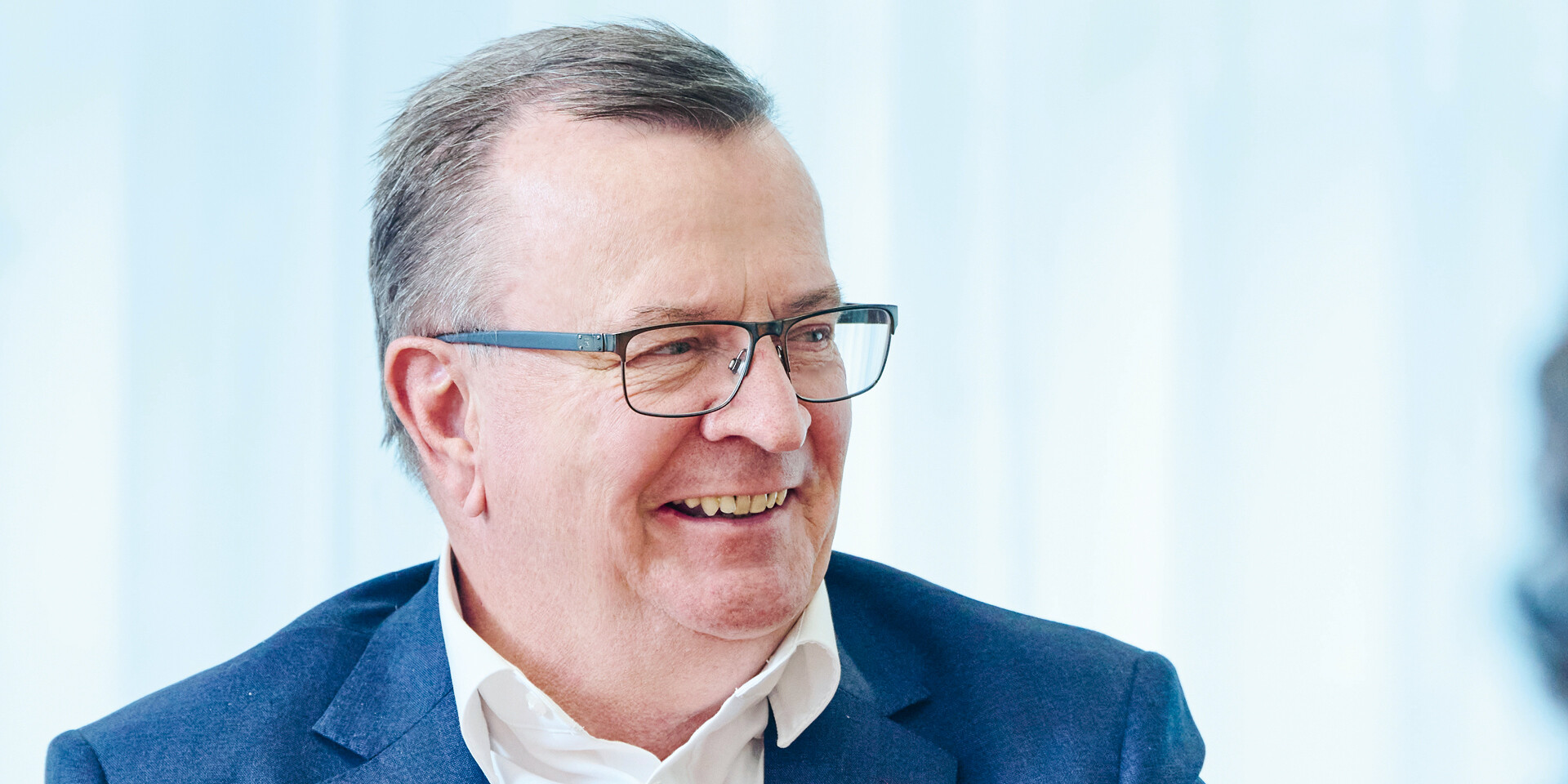
HOERBIGER delivered strong operational performance in 2025 and set a clear strategic course. In this interview, Dr. Martin Komischke, President of the Board of Directors of HOERBIGER Holding AG, explains how HOERBIGER remained stable despite difficult conditions, what lies behind the acquisition of Physik Instrumente and what goal he never loses sight of for HOERBIGER.
Dr. Komischke, if you had to summarize the past year in one sentence: was it a year of new beginnings or a year of proving itself for HOERBIGER?
Dr. Martin Komischke — 2025 was both. It was a year in which HOERBIGER demonstrated its strength in its core business – and at the same time, a year in which we consistently drove forward our strategic transformation. In a challenging environment, we maintained stability while setting a decisive course for the future.
“In 2025, HOERBIGER maintained stability in a challenging environment while simultaneously setting a decisive course for the future.”
Many industrial companies have recently been under massive pressure. HOERBIGER, on the other hand, remained stable. What makes the Group so resilient?
MK — Our resilience is based on clear factors: a broad industrial footprint, strong market positions in critical applications, and robust capabilities in cost management, cash management, and operational excellence. Added to this is our long-term ownership approach, which allows us to act with focus and determination even during volatile cycles.
However, the most important factor in our success is our employees and the management. At a time when many comparable companies were under considerable pressure, they led HOERBIGER to new heights of performance. For this, I would like to express my sincere thanks.
What was your personal greatest success of the past year – and which challenge kept you particularly busy?
MK — A key milestone was the clear strategic focus of our portfolio, capped by the acquisition of Physik Instrumente (PI). At the same time, it was challenging to consistently enforce priorities and discontinue activities that were not strategically or economically sound. This applies not only to the portfolio as a whole but also to projects within the business areas. These decisions were supported jointly by the Board of Directors and the Executive Board – and it is precisely this shared understanding that I value highly.
The acquisition of PI ranks among the most significant strategic decisions of recent years. What contribution is PI expected to make in the long term?
MK — PI stands for world-class precision technology. With PI, HOERBIGER is tapping into structurally growing markets such as semiconductor production, photonics, life sciences, and high-precision automation. At the same time, we are gaining in-depth expertise in piezo technology, nanopositioning, control engineering, and system integration – capabilities that are of central importance for the Group’s future development.
What does it mean to you personally that PI is now part of HOERBIGER?
MK — I have known PI for many years as an exceptional technology company. The fact that PI is now part of HOERBIGER is not the result of a single deal, but rather the consistent implementation of a longheld conviction: to build a business segment driven by powerful megatrends that opens up new technological horizons for us. This conviction has now become a reality.
What role should M&A play for HOERBIGER in the future?
MK — We are pursuing a clear strategy: the targeted expansion of complementary technologies and markets with high barriers to entry. Not diversification for its own sake, but industrial logic and sustainable value creation. Purposeful, thoughtful, and with a clear strategic vision.
The transformation of recent years has been substantial. What further steps are needed for HOERBIGER to reach its strategic ambition?
MK — We have accelerated our focus on key technologies, but have not yet fully completed this process. In addition, we are scaling up more rapidly in new markets and achieving even closer integration of technology, market, and capital allocation. We are heading in the right direction; what matters now is consistent implementation.
What role does China play in this development?
MK — China is gaining significant importance in many industries. This is due, on the one hand, to a noticeable shift in demand and, on the other hand, to China’s growing role as a key player in the technology sector. All of our local business areas are benefiting from this. At the same time, geopolitical developments and regulatory requirements are making it increasingly challenging to do business in China. That is why we increasingly need structures that are legally, technologically, and organizationally tailored to China. Thanks to our “Local for Local” strategy, which we have been pursuing in China for over 30 years, we have a decisive advantage that tangibly supports and accelerates our learning process.
Since we develop and produce our products with local teams where our customers are located, while also relying on local supply chains, we quickly grasp local market dynamics and can adapt immediately to new requirements. This local presence and proximity to customers give us a particular strength, especially in complex markets like China, and enable us to act quickly, flexibly, and independently. This also applies to other fast-growing markets such as India and Latin America, where local teams, local supply chains, and local value creation drive our growth.
A year ago, you mentioned a delay regarding hydrogen. How do you assess the situation today?
MK — Market dynamics are falling short of initial expectations. We have therefore discontinued certain projects and moved away from overly optimistic assumptions. In the long term, hydrogen will be relevant primarily for industrial applications, not for mass mobility. At the same time, we are active in areas where applications make economic sense – such as compressors for refueling trailers. Overall, we are approaching the topic with a level-headed perspective and without exaggeration.
You know the automotive industry better than almost anyone else in the company. How do you assess the transformation of the industry?
MK — The change is profound, structural, and irreversible. It sometimes feels like a tension strap that keeps tightening one notch at a time. The pressure is mounting – and yet we still have to perform day in and day out. We have learned to work successfully under this constant strain. Because one thing is clear: there is no going back. Of course, there will be phases when this “strap” stops tightening and we can catch our breath for a moment. But fundamentally, the change remains.
Our employees and management are achieving extraordinary results under these extremely challenging conditions. When you’re under so much pressure and still deliver results, it shows just how strong the organization really is. The fact that our team not only faces these very difficult conditions but adapts to them in an exemplary manner is a quality that is crucial today.
What prospects do you see for HOERBIGER in the automotive sector?
MK — Automotive is a core business for us, and we stay committed to it. Even though growth in this environment will be challenging, the business will remain economically attractive to us for decades to come and is essential to HOERBIGER‘s stability. We have deliberately prepared for the worst-case scenarios. Anything less drastic that actually happens will ultimately provide us with an additional tailwind.
You have halted or scaled back innovation projects. What is the state of HOERBIGER’s innovative strength?
MK — Innovative strength is not measured by the number of projects, but by their impact. Ending projects is not a renunciation of innovation, but a prerequisite for more focused and effective innovation. We have gained technological clout, but we need to move even faster, especially when it comes to market penetration. Innovation is only successful when it reaches the market.
How does our customers’ economic uncertainty affect joint innovation projects?
MK — A sense of caution is palpable across many industries. Projects are being postponed or canceled. Nevertheless, we are working on an impressive array of exciting projects across all Divisions and Business Units. Throughout the company, initiatives are emerging that are at the cutting edge of technology and have enormous market potential. We have many irons in the fire, and some of them are so promising that they could provide significant revenue growth in the future. Of course, it is not yet clear which of these projects will ultimately be the biggest success. But that is not the decisive factor. It only takes two or three truly major projects to propel HOERBIGER forward in a sustainable way. And it is precisely for these opportunities that our teams around the world are working with great dedication.
So you’re optimistic about HOERBIGER’s continued profitable growth?
MK — Yes, definitely. The key is that we don’t spread ourselves too thin. With all the opportunities, contacts, and ideas out there, it’s crucial to identify what’s essential and focus on that. We must ensure that we don’t take on too much at once, but rather that we pursue the right projects with the necessary consistency. The ability to focus as an organization on the right projects will be one of the most important success factors in the coming years.
The global economy remains volatile. What scenarios do you anticipate for the next 12 to 18 months?
MK — Economic forecasts are extremely difficult at present. We are addressing this uncertainty with flexible cost structures, robust cash flow, and clear scenario planning for each segment. Defensive when it comes to risk, aggressive when it comes to opportunities. Our broad portfolio mix allows us to offset weaknesses in individual markets with strengths in others – a clear advantage over more narrowly focused, publicly traded companies.
What goal for HOERBIGER do you never lose sight of?
MK — To sustainably position HOERBIGER as a technologically leading, profitable technology company in future-oriented markets. I have been pursuing this goal for over 30 years at HOERBIGER. And I see it as my most important task in the future as well.
What is your personal contribution to this future?
MK — Strategic clarity, a long-term perspective, as well as the courage and discipline to make even uncomfortable decisions and then see them through to implementation. I see my role as being a critical, constructive, and courageous sparring partner for the Executive Board.