Ready for future market demands – strengthened by transformation
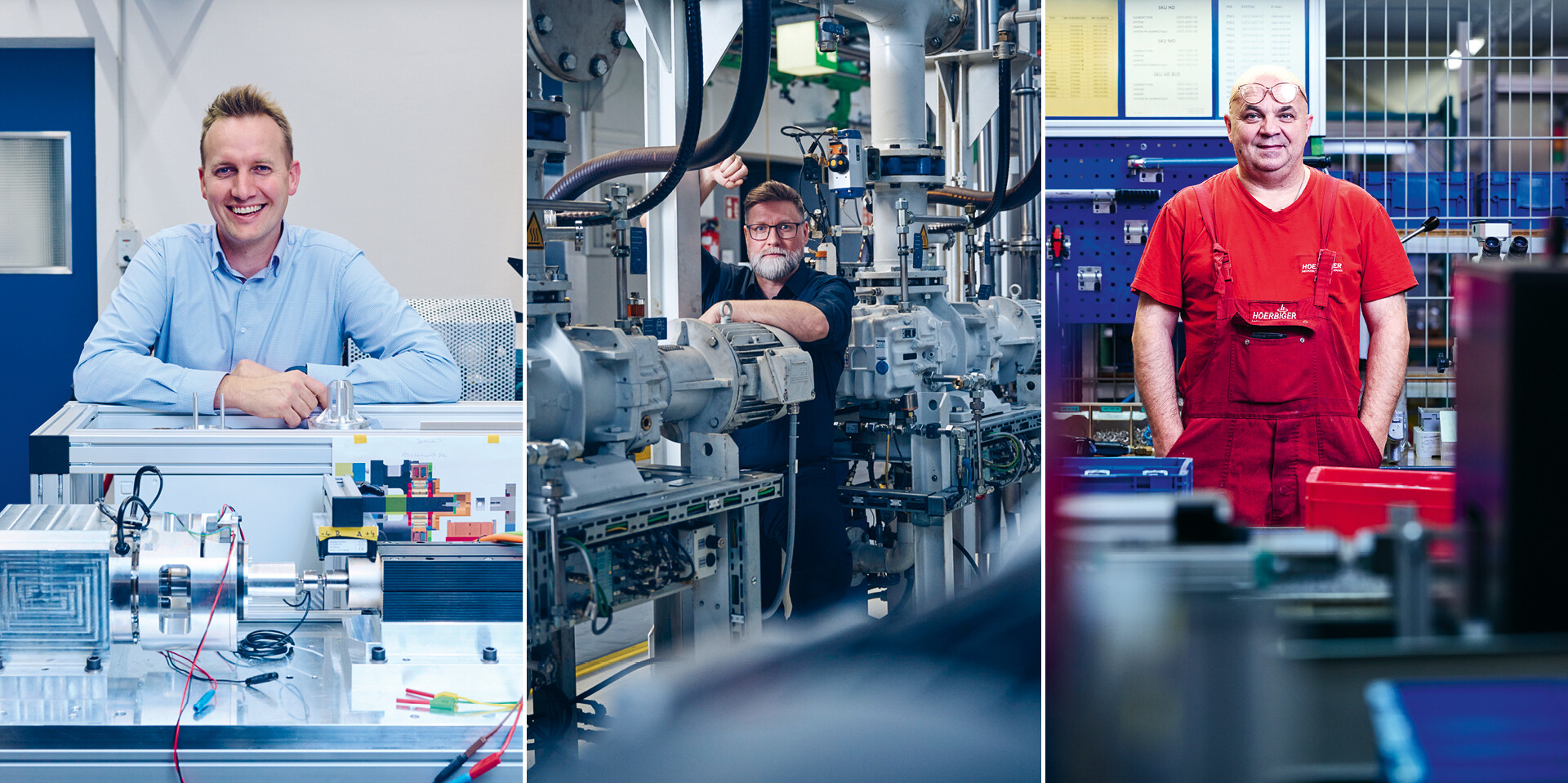
The Automotive Division closed out 2025 on a strong note despite persistently challenging global market conditions and set an important course for the future. It proved to be robust, adaptable, and competitive. The focus for 2026 is on securing and expanding market share in the core synchro and Actuation Comfort Solutions (ACS) businesses, as well as targeted growth in eCoupling.
In fiscal year 2025, the Automotive Division generated revenue of 465.3 million euros, marking a slight decline of 3.5% compared to the previous year – while maintaining strong profitability.
Market environment and impact on synchro’s business
The global automotive industry remains in a phase of profound upheaval. In Europe, vehicle production in 2025 was still significantly (around 20%) below pre-pandemic levels. The share of battery-electric vehicles continued to rise to 14%, while competitive pressure – particularly in the area of internal combustion powertrains – intensified further. In China, the ramp-up of electromobility accelerated, accompanied by intense competition from new market entrants.
These market developments had a negative impact on the synchro business, as evidenced by a decline in order intake and a lack of new projects for internal combustion engines. At the same time, the successful ramp-up of several very large series orders, as well as a consistent focus on key customers and key projects, contributed significantly to stabilizing the business. The ongoing discussions regarding a possible postponement of the ban on internal combustion engines in the EU tended to have a supportive effect.
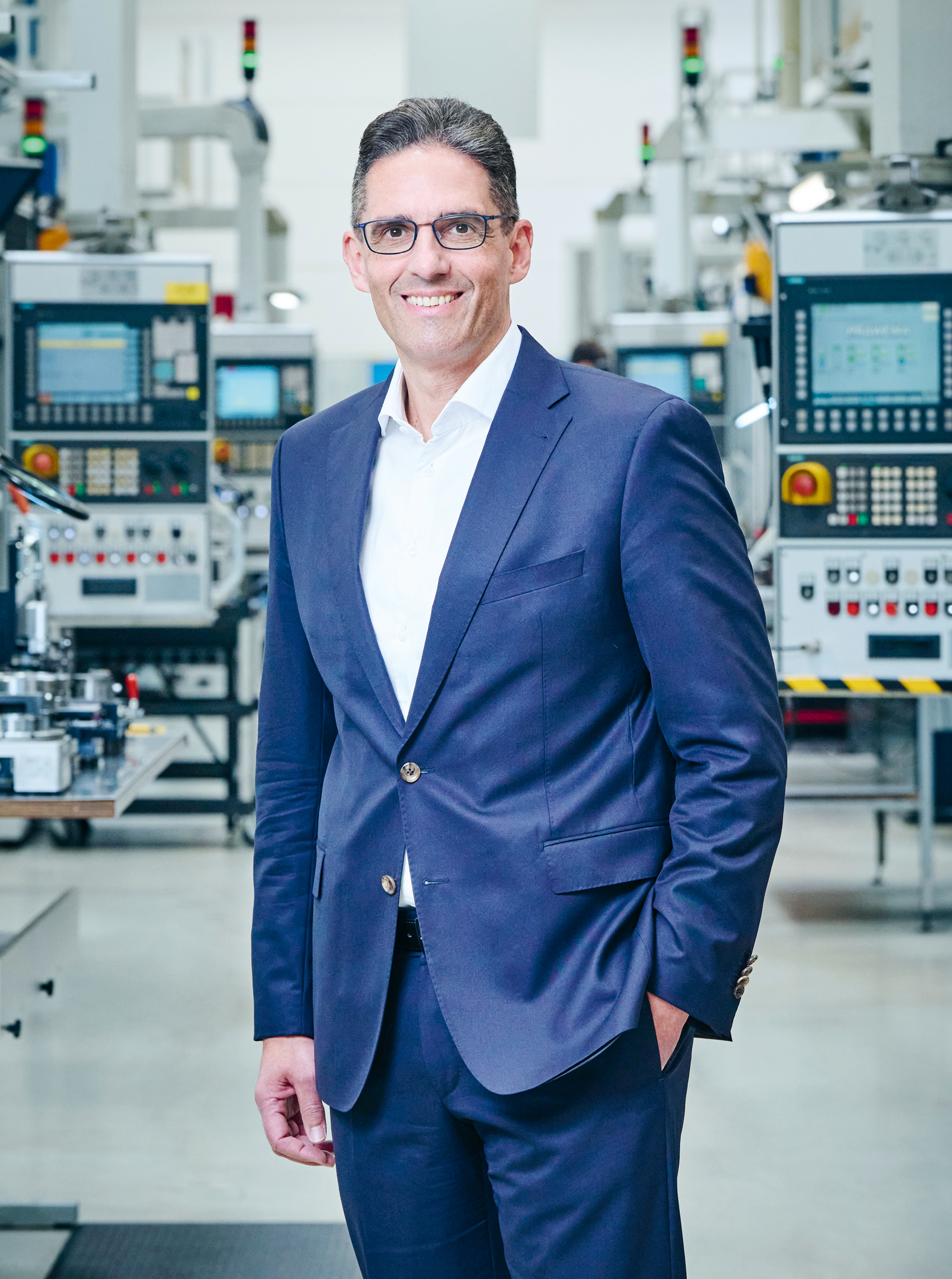
“ We have demonstrated that we do not only manage change but actively shape it – today we are stronger, more agile, and better prepared for the demands of tomorrow.”
Automotive Division and Rotary Business Unit
Portfolio streamlining and adjustment of organizational structures
In 2025, the Automotive Division sharpened its strategic focus and consistently concentrated on a sustainably profitable core business. This led to two major strategic decisions: activities in the battery components segment were discontinued, and HOERBIGER sold its reed valve business to Nimbus, a European industrial holding company with a long-standing track record.
Further significant reductions in sales and administrative expenses, targeted operational cost-cutting measures, the expansion of automation, and a global procurement strategy with a clear focus on “best-cost sourcing” have secured the division’s long-term profitability.
Focus on product lines and people
The strategy was clearly to strengthen the core business of synchronizers. To this end, the focus was on market and cost leadership. ACS focused on chassis applications in series production and new developments, particularly components for semi-active suspensions and leveling systems.
In the eCoupling product line, a major emphasis was placed on innovation. The electromagnetic dog clutch emDOC recorded high demand worldwide; the market launch in China was successfully completed. The electrolyzer business area was specifically adapted to the market and economic conditions of the hydrogen economy. The Division’s successful performance was largely driven by the commitment, flexibility, and strong team spirit of its employees. The corporate culture was characterized by cohesion, a high level of commitment, and a professional and open attitude toward strategic and structural changes.
Market share, efficiency, and targeted growth in 2026
The focus is on securing and strategically expanding market share in the synchronizer business, as well as on efficiency and cost leadership, in order to remain competitive in the existing business. At the same time, the global growth of the eCoupling product line is to be further advanced.
In both the EU and China, the automotive market is expected to remain stable overall, though with weak growth, while the share of e-mobility continues to rise. The Automotive Division focuses on consistent strategic implementation and efficient structures. Cost leadership and targeted project acquisition across all product lines – synchro, ACS, and eCoupling – remain the top priority.