“The people at HOERBIGER want to help shape the future and take on responsibility.”
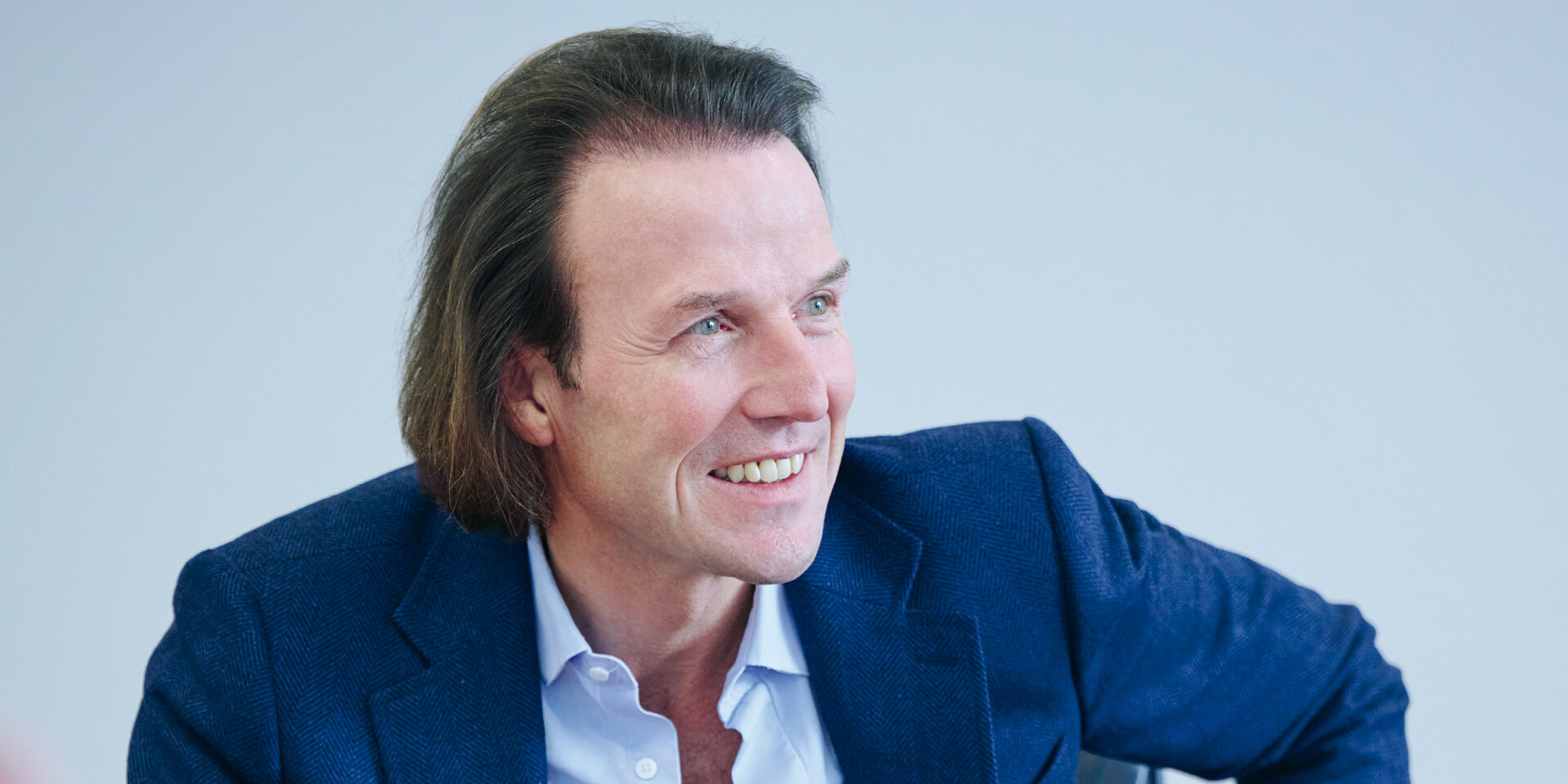
In this interview, Dr. Thorsten Kahlert, CEO and Chairman of the Executive Board, looks back on a successful yet challenging fiscal year. He explains why consistent portfolio management, strict cost discipline, and the acquisition of PI are key drivers of the transformation – and why cultural strength and operational excellence remain the decisive competitive advantage even in times of geopolitical uncertainty.
How would you assess the past fiscal year for HOERBIGER?
Dr. Thorsten Kahlert — From an operational perspective, 2025 was a successful year. Despite a slight decline in revenue, we were once again able to increase our profitability through rigorous cost management and discipline. As a result, we achieved an all-time high in profitability for HOERBIGER overall.
From a strategic perspective, we have sent a strong signal in 2025. With the sale of the reed valve business in the Automotive Division and the sale of Altronic in the Engine Business Unit, we have consistently implemented our strategy and focused the Group’s portfolio on the areas where we see ourselves as the best longterm owner for the business. With the acquisition of PI, we are opening a new chapter for HOERBIGER. The largest acquisition in the Group’s history is more than just a growth step – it is a clear commitment to transforming HOERBIGER into a company with a strong position in high-tech markets.
“ The acquisition of PI is more than just a growth move – it is a clear commitment to the transformation of HOERBIGER.”
Can you explain why PI is such a good fit for HOERBIGER?
TK — PI is – like HOERBIGER – a true leader in innovation and technology, the number one in its markets, and sets the standard in the industry with performance-defining products. This aligns perfectly with our own commitment to quality, reliability, and technological excellence.
PI is significantly advancing our transformation in several key ways. First, PI excels in the fields where the future is taking shape: semiconductor manufacturing, automation and photonics, as well as satellite communications and aerospace. These markets offer enormous growth potential, from which HOERBIGER will also benefit greatly. On the other hand, PI also takes us to the next level technologically. HOERBIGER has traditionally been very strong in mechanical components. PI perfectly complements our range of expertise with mechatronics – that is, the interplay of mechanics, sensor technology, electronics, and software in high-precision systems. This opens up new opportunities for us in both our existing business and the new PI business.
You repeatedly emphasize the importance of HOERBIGER’s core business. Why?
TK — Because our core business has brought us to where we are today. And because it is also the foundation for everything we will do in the future. That is why we will continue to invest in these areas to strengthen them, drive innovation, and win market share.
At the same time, we must boldly seize new opportunities and invest in new areas that resolutely drive our transformation. In doing so, we are shaping our future and securing HOERBIGER’s long-term stability and success.
In addition to acquisitions, HOERBIGER 2025 also made some divestitures. How does that fit together?
TK — That’s part of our active portfolio management. We regularly assess whether we are still the best owner for a business. After carefully reviewing all options for Altronic and the reed valve product segment, we concluded that other owners offer better conditions for the next stage of development. Believe me, decisions like these are never easy. In particular, the separation from Altronic was a very significant moment for me. The Altronic team, with whom I worked closely at HOERBIGER, has grown very dear to me. What matters is that these companies and their employees are now in good hands with strong partners.
The acquisition of PI is the largest in HOERBIGER’s history. Should we be concerned about the Group’s stability?
TK — No. Thanks to the strong performance of our businesses in recent years, our financial foundation is very solid. The profitable growth of the past few years has provided us with the necessary financial resources and a high level of credibility among investors. This is crucial, because our top priority is and remains the longterm stability of HOERBIGER.
What are your priorities for 2026?
TK — From the Group’s perspective, three areas of focus will take center stage in 2026: first, ensuring and actively driving PI’s growth. The successful integration, preserving PI’s entrepreneurial strength, and achieving sustainable growth in attractive future markets are our top priorities.
Second, we are making targeted investments in our core business to expand market share and resolutely tap into new growth areas. To this end, we are sharpening our focus on key technologies and driving forward selected, group-wide innovation projects. In addition, we are selectively evaluating acquisitions in individual business segments that will strengthen our market position, strategically expand existing capabilities, or broaden our regional presence. At the same time, we regularly review our portfolio to ensure the long-term prospects of each business.
Third, we maintain a very high level of cost discipline. This is a key lever for securing our financial stability and strengthening the Group’s resilience in a market environment that remains challenging.
What goals have you set for this fiscal year?
TK — Although we expect the coming months to remain marked by high volatility and geopolitical uncertainties, we are consistently pursuing our Group strategy of profitable growth and aiming for low-single-digit revenue growth with stable profitability for the 2026 fiscal year.
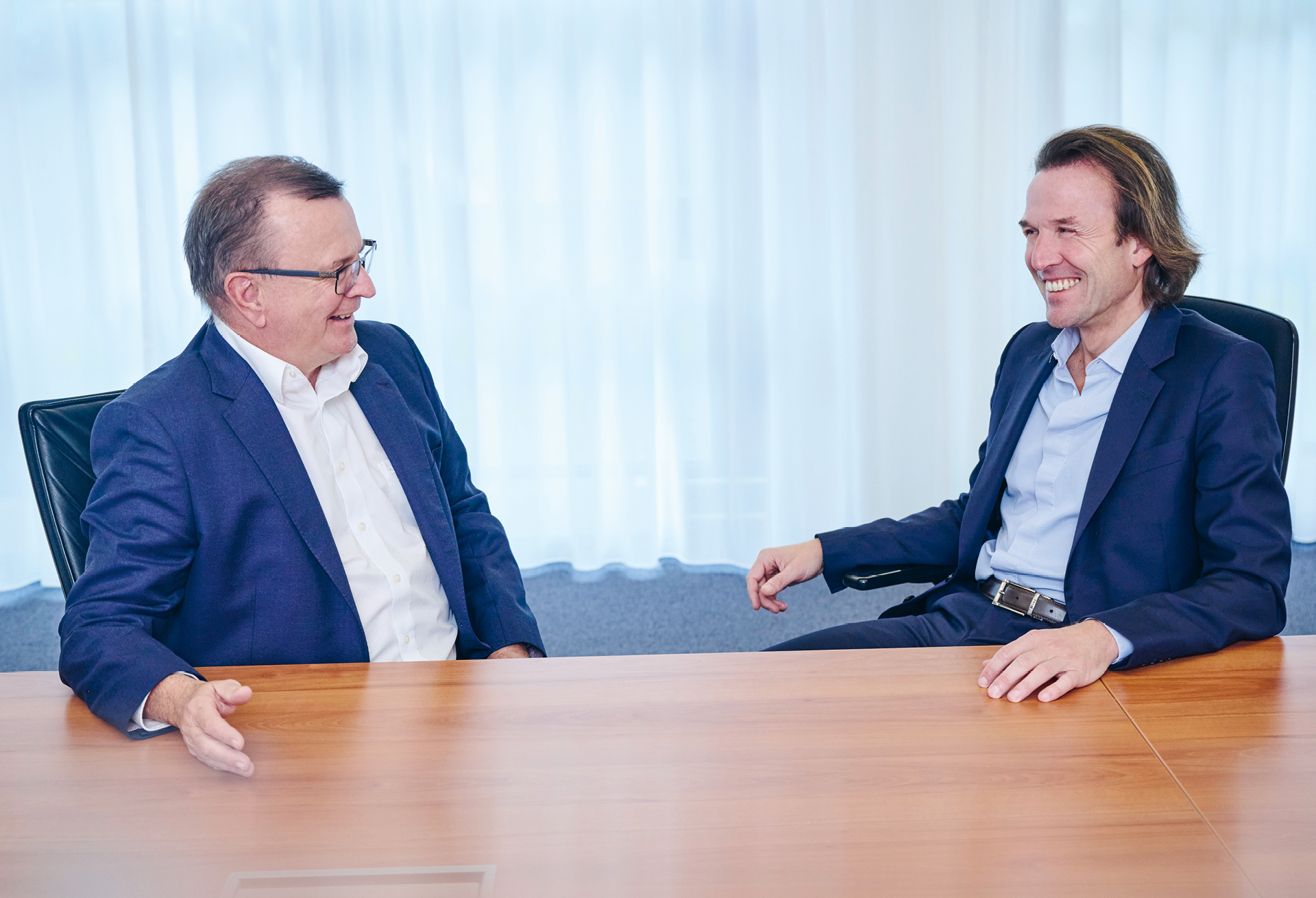
Is the transformation complete with the portfolio adjustment and the acquisition of PI?
TK — No. Our transformation is not a project with a clearly defined end date. It is an ongoing process that will never be complete. Standing still means falling behind, because customer needs are constantly evolving and markets are constantly changing as a result. Disruptive technologies such as Artificial Intelligence are fundamentally transforming business models, ways of working, and entire industries.
At the same time, climate protection and the energy transition require decisive action and continuous adaptation. Transformation is therefore not a phase that one “completes,” but rather a permanent entrepreneurial mindset that HOERBIGER has been practicing for years: staying alert, acting with foresight, and constantly realigning itself. Only in this way can HOERBIGER remain capable of acting in a world of constant uncertainty and be in a position not only to withstand market shifts but also to actively shape them.
Constant change takes a lot of energy. How do you perceive the willingness to change within the company?
TK — That’s true: change takes effort. I feel this just as much as many of my colleagues in the company. In my view, however, it becomes noticeably easier when positive results – achieved through our collective efforts – become visible. HOERBIGER has grown profitably over the past five years and has proven resilient even under extreme market conditions. That’s inspiring and makes us want to achieve even more.
Our colleagues at HOERBIGER are highly open to change – and they are resilient. This is clearly demonstrated by the latest “Voice for Excellence” employee survey, in which 84% of our approximately 6,500 employees worldwide participated. To me, this exceptionally high participation rate sends a strong signal: the people who work at HOERBIGER want to help shape the future, they want to contribute their perspectives, and they are ready to take on responsibility.
I find it particularly encouraging that we are seeing not only high participation but also measurable improvements. Compared to the previous survey, both employee engagement has risen by five percentage points to 89% and employee satisfaction with working conditions has increased by seven percentage points to 85%. HOERBIGER has thus once again improved on both metrics and ranks among the top group of comparable companies across all organizational levels and hierarchies.
At the same time, the results show that the previously jointly defined focus areas – such as strategy communication, feedback, and development opportunities – have made significant progress from the employees’ perspective. It is particularly important to me that this positive feedback is consistent across all business areas, hierarchical levels, and regions.
This confirms to me that at HOERBIGER, culture and change aren’t imposed from above, but are actively embraced by everyone.
Which goal for HOERBIGER is so important to you that you never lose sight of it?
TK — Our culture and our resilience are the backbone of HOERBIGER. Especially in times of transformation, we must not take these strengths for granted. A performance- oriented, value-based culture and the ability to remain stable and capable of acting even during challenging market phases are, in my view, decisive factors for success. My goal is therefore to keep HOERBIGER’s culture and resilience exceptionally strong, as they have made us successful in recent years.
“Our culture and our resilience
are the backbone of HOERBIGER.”
In your opinion, what is the most important contribution your role can make today to the future of HOERBIGER?
TK — I have set myself the goal of consistently driving forward HOERBIGER’s strategic transformation while deliberately preserving the strengths we have built up over time. After all, the aim is not to break with the existing structure, but to develop it further in a targeted manner. We must adapt the cultural and operational strengths we have built up over more than 130 years to the demands of the present and leverage them for the future. This should play a decisive role in helping us achieve sustainable, profitable growth and remain a stable and attractive employer for our employees.